
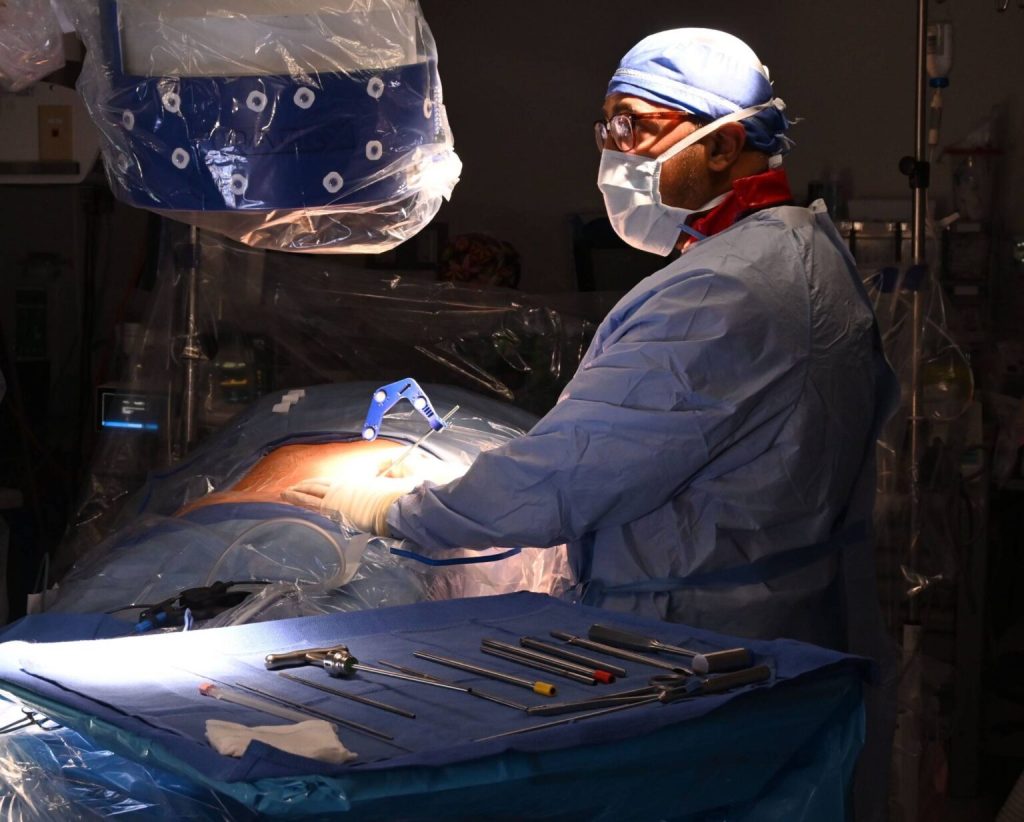
Introduction: A Less Invasive Approach to Spinal Health
If you’ve been struggling with chronic back or neck pain, you may be seeking a treatment that balances effectiveness with minimal recovery time. Endoscopic Spine Surgery is a cutting-edge, minimally invasive procedure that’s transforming how spinal conditions are treated. By leveraging advanced technology and precision, this technique offers patients a faster return to normal life with fewer complications than traditional open surgery. In this blog post, we’ll explore what Spine Surgery entails, the conditions it addresses, its benefits, and what to expect during recovery.
What is Endoscopic Spine Surgery?
It is a procedure that uses an endoscope (a slender tube with a camera and light) to visualize and treat spinal issues through a small incision. Unlike traditional spinal surgery, which requires large incisions and muscle retraction, this technique allows surgeons to access the spine directly while preserving surrounding tissues. It’s often used for herniated discs, spinal stenosis, and degenerative disc disease.
Key Components of the Procedure:
- Endoscope: A tiny camera that transmits real-time images to a monitor, guiding the surgeon.
- Specialized Tools: Miniaturized instruments for removing, repairing, or stabilizing spinal structures.
- Local or Regional Anesthesia: Many cases can be performed with light sedation, reducing systemic risks.
This approach is part of the broader category of minimally invasive spine surgery (MISS), which has gained popularity due to its patient-friendly outcomes.
Why Consider Endoscopic Surgery?
Traditional spinal surgery often involves significant tissue disruption, lengthy recovery, and higher infection risks. Surgery, on the other hand, is ideal for patients seeking:
- Pain Relief from Herniated Discs: When a disc’s outer layer ruptures, it can press on nerves—endoscopic discectomy removes the offending fragment.
- Relief for Spinal Stenosis: Narrowing of the spinal canal is treated by expanding the space using endoscopic tools (foraminotomy or laminotomy).
- Degenerative Disc Repair: Age-related wear and tear can be addressed without fusing spinal segments unnecessarily.
For example, a patient with a herniated disc might undergo a 30-minute procedure with a dime-sized incision, compared to a 6-inch incision in traditional surgery. The result? Less scarring and quicker healing.
How Endoscopic Surgery is Performed
Step-by-Step Breakdown:
- Pre-Operative Imaging: MRI or CT scans map the spinal issue.
- Incision: A small (5–10mm) incision is made near the affected area.
- Endoscope Insertion: The scope is guided through the incision, using contrast dye for visibility.
- Tissue Removal or Repair: The surgeon removes herniated disc material, shaves bone spurs, or releases compressed nerves.
- Closure: The incision is stitched, and the patient is monitored briefly before discharge.
Technology Advancements: High-definition cameras and robotic-assisted systems enhance precision, reducing the risk of accidental nerve damage. For instance, some procedures now use ultrasonic bone tools to selectively remove tissue without harming healthy structures.
Benefits of Endoscopic Spine Surgery
The advantages of this procedure over traditional approaches are substantial:
| Factor | Endoscopic Surgery | Traditional Surgery |
|---|---|---|
| Incision Size | 5–10mm | 6+ inches |
| Hospital Stay | Outpatient (same-day) | 1–3 days inpatient |
| Recovery Time | 1–2 weeks | 4–6 weeks |
| Infection Risk | 1–2% | 3–5% |
| Post-Op Pain | Mild (often NSAIDs sufficient) | Moderate (may need opioids) |
Patients often return to work and light activities within a week, a stark contrast to the months-long recovery of open surgery.
Recovery and Rehabilitation
Post-Operative Care Tips:
- Early Mobility: Walk gently the same day to prevent blood clots.
- Physical Therapy: Gentle exercises begin within 1–2 weeks to rebuild strength.
- Activity Restrictions: Avoid heavy lifting, twisting, or bending for 4–6 weeks.
Most patients report significant pain reduction within days. A 2022 study in the Journal of Minimally Invasive Spine Surgery found 85% of endoscopic discectomy patients reported “good to excellent” outcomes at six months.
Risks and Considerations
While Endoscopic Surgery is generally safe, it’s not without risks:
- Infection: Though rare, occurs in <1% of cases.
- Nerve Injury: Less likely than in open surgery but still a concern.
- Dural Tear: A small risk of spinal fluid leakage, often resolved with a blood patch.
- Recurrence: Rare, but possible if new disc herniation occurs.
Not a Universal Solution: Endoscopic techniques are less effective for complex issues like severe spinal instability or deformities. For these cases, traditional fusion or instrumentation may be necessary. Always consult a specialist to determine if you’re a candidate.
Choosing the Right Surgeon
The success of Spine Surgery hinges on the surgeon’s expertise. When selecting a provider:
- Check Credentials: Ensure they are board-certified in orthopedic surgery or neurosurgery.
- Experience: Ask about their procedure volume; studies suggest surgeons who perform at least 20 endoscopic cases/year achieve better outcomes.
- Facility Technology: Advanced surgical centers with 3D imaging systems enhance precision.
Request to see before-and-after examples of similar cases to gauge the surgeon’s skill.
Conclusion: A Bright Future for Spinal Care
Endoscopic Spine Surgery represents a paradigm shift in treating spinal issues, offering a balance of efficacy, safety, and patient comfort. By minimizing tissue damage, reducing recovery time, and leveraging real-time imaging, it’s becoming the go-to option for many spinal conditions. If you’re suffering from chronic spinal pain, consult a qualified specialist to explore whether this innovative procedure could be your ticket to a pain-free life.